Showing posts with label Hasler. Show all posts

Monday, October 1, 2018

Biography of Hans Ulrich Winkler and Mary Thalmann Winkler Written by Louisa Thalmann Hasler

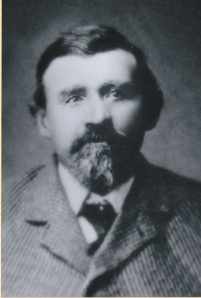
Hans Ulrich Winkler 


Biography of Hans Ulrich Winkler and Mary Thalmann Winkler
Written by Louisa Thalmann Hasler

In a beautiful little valley or Switzerland in the little town of Zell, Hans Ulrich Winkler was born December 21, 1838, His parents were Jacob Winkler and Susanna Burri. He was the youngest of four living children. Four others died in infancy. The three older children were girls, Elisabeth, Susanna, and Anna. Their home was an ideal one and also their family life. The parents conducted an open house or inn, also a bakery and they owned a little farm.

Elisabeth was married to Jacob Ott in 1856. Susanna married John Thalman in 1848. When Ulrich became of age he was sent to the city of Zurich to perfect the bakery trade, and also learned fine bakery. After he graduated he came home and helped his father run a good business. There were large factories In the neighborhood and the town people were supplied with fresh bread every day.

When Ulrich was twenty-two years old be courted and married Mary Thalmann of Hamburg, May 6, 1860. As mentioned before their home was a prosperous and happy one. Their father (Jacob Winkler) was a fine singer and his children had all inherited his talent and had fine voices. Ulrich and Anna also played the guitar. Their home was much frequented by the young people and all would join in singing and playing, especially on Sundays and in the evenings.

Such was the happy condition of their home in the early spring of 1863 when the youngest sister Anna and Mary, his wife, went on an errand to a home where the mother of the family had joined the Mormons. They found a missionary there from Utah. They talked of the Gospel of Jesus Christ of Latter-day Saints and both were so impressed by the doctrine that they promised to return and learn more of the new message. This they did and in a short time they both applied for baptism. They brought the message home to the rest of the family and nobody seemed much opposed to it. Ulrich investigated and was convinced of the truth and entered into the waters of baptism. All went well until the spirit of gathering came upon them. The missionaries worked hard to encourage them to go to Zion, well knowing that the spirit of opposition was so strong that delay might weaken their faith.

It was a great undertaking to leave their aged parents alone and to leave their beautiful home. The work was too hard for their parents to continue to do alone. The parents thought they could keep them from going by refusing them the money to emigrate. But Mary’s mother (Anna Thalmann) came to their rescue. She saw that a great change had come upon this young family for the better. Although she could not then understand the gospel she felt moved upon to help them, seeing their determination to live a better life and their strong desire to go. She borrowed the money to assist them to emigrate.

Sister Anna was to be married; her trousseau was all ready, but the young man broke the engagement at once when she became a Mormon.

Ulrich and his wife had two beautiful children and she was to become a mother again before their journey's end. Therefore they found it advisable to journey together. Sister Anna was very much attached to the children and would be a great help to them.

Preparations were made to start with the first emigrants who were to leave Switzerland on May 6, 1864. By this time the evil one used all his power to stop them from leaving. Relatives and friends combined with their entreaties to hinder their purpose.

On the last evening at home a few of his immediate family had gathered to say goodbye. They were to leave on an early train to the city of Zurich. Soon the house was filled with his young friends who seated themselves at the tables. (I was also present at this occasion.) It was whispered to us that these people, who now fancied in their belief that violence should be done to stop them, were there for that purpose. They were waiting for the two elders from Utah whom they believed had done all this mischief. However, Ulrich was informed of the trouble and warned the elders not to come to the house.

Their young friends sat there sullenly. It was hard telling what they had planned to do. Although they had loved their friend and companion so dearly their sorrow and regrets to lose him were intense and they were surely grave. All at once Ulrich stepped into the room where they were assembled. He addressed them something like this: “My dear friends: I feel the parting from you all just as keenly as you do, but I am convinced of the truth of this unpopular religion.”   He then bore a strong testimony of the truth to them. He wished them all happiness and told them that nothing they could say or do to the contrary could change his conviction. He then told them there was only a short time left before their departure and that he would like to spend the few moments left with his father and mother and dear ones. At this, all assembled rose to their feet and extended their hands. All were in tears, but wished him God-speed and happiness. The next minute the room was empty.

The parting from these parents was indeed a supreme test of their faith. But a spirit of peace and happiness prevailed. What other spirit could exist when such an heroic character is manifested. (Nearly sixty years have elapsed since then, but never can I remember or talk about that scene without shedding tears of joy because this service of his was the means of bringing all their own family into the fold.) And also his true and devoted wife Mary brought her dear ones into the fold and all gathered in Zion. Ulrich's father died a few years later but had received the gospel and was baptized. The aged mother came to Utah with her other daughters and their families, thirteen in number.

The journey of Ulrich Winkler and family was an arduous one. They arrived in London safely but by an unforeseen cause the sailing vessel was delayed and they had to stay in that city a month. When the ship arrived hurried preparations for over a thousand emigrants was made. Facilities for preparing food on the ship were not ample. It was only possible to cook things every two or three days and people suffered on that account. The wind was not favorable to them so it took nine weeks to reach New York harbor.

The young mother suffered a great deal for want of food and it brought on a premature confinement. The baby lived only eight days and was named after the captain of the vessel, Hudson. Mary was so reduced in strength that she had gone nearly blind from weakness. She was tenderly nursed on the overland journey to Wyoming and gained some strength.

In Wyoming they had to wait four weeks again until the emigration teams came from the valley. Having purchased there a wagon and team they started out three days before the main company was ready to start. Some of the Utah brethren had told them they would always be in the lead. However, they were ill advised. They had not gone but a few days journey when one evening they saw Indians prowling around and found these Indians had burned a bridge ahead of them. This company had to make a hasty retreat and wait for another company coming along.

For a time all went well; then the little boy became very sick with what seemed to be scarlet fever. Everything was done for him that faith could do but he grew worse. One evening they reached a farm house where they begged the people to let them come in, but the folks no doubt knew the nature of the disease and refused, but gave them a piece of candle. The dear little boy's spirit took its flight just a moment or two before the candle went out.

They still had the little girl to comfort them but soon she too took sick. Under nourishment brought her down very low and dropsy set in. Then the mother took rheumatic fever and lay on her bed in the wagon helpless as a baby the rest of the journey to Salt Lake City. Ulrich and his sister Anna nursed her as well as they could and then Anna took sick. Of course they were among their brothers and sisters in the faith and they did all they could to help the afflicted family.

But cholera broke out in the camp and many died of it. Every morning the company had to bury some of the dead. In all this sore affliction Ulrich never complained or wished himself back home again.

They reached Salt Lake City the last of October 1864. Ulrich had taken ill the last week of their journey but when they reached the Valley he was kindly nursed by the saints and by November when the first snow was falling they again took up their journey to Richfield where they were advised to go to help settle that place.

When they reached there the weather was favorable for them to dig a dugout as they called it then and make themselves comfortable for the winter. There was plenty of wood there to keep warm with. Before he left Salt Lake he found a brother who loaned him $20.00 for which they got them a hundred pounds of flour. I believe they must have lived a good deal on the plan of the united order. Those who had come and raised grain the year before must have divided with the emigrants for there were a number of them and all out of means.
In the spring Ulrich bought some land. The settlers who lived in Richfield were destitute of clothing and were willing to sell some of their land for clothing and bedding. Ulrich started farming and raised enough bread stuff for the coming year. In spare time he made adobes to build them a home. He finished two rooms the next year.

In July of 1865 Ulrich and his wife Mary, his sister Anna and Claus Peter Anderson went from Richfield to Salt Lake City with ox team to get their endowments. It was then not safe to travel alone, but they took the shortest out through Thistle Canyon, the road being only an Indian trail. When they reached the canyon they found the coals still hot where Indians had camped, and had killed a man and his wife and taken their provisions. They were in the act of unyoking their oxen when they saw how near their danger was and they drove on as fast as the animals could go, none of them daring to speak a word until they reached the mouth of the canyon.

On December 31, 1866, a son Herman came to gladden their hearts. He helped to fill the place of the two little boys they had lost on their journey. In the year 1866 the Indians began to be troublesome. The settlers guarded their few animals and fields, but in the spring of 1867 the people were advised to leave Richfield. A few brethren had been killed and it was unwise to stay. Ulrich and his little family moved to Manti. Many of their friends went still further north to Mt. Pleasant and they soon followed taking up their abode in a one-room school house. Ulrich again went to work making adobes and soon built himself a one-room house. His family now numbered five, a son Henry having been born in April 1868. However, he stayed with there only a short time dying in December of the same year.

The next few years were prosperous ones and they enjoyed health and strength. Since he had left his dear ones in the old home in Switzerland he had always been in communication with them and preached the gospel to them in his letters. This brought its reward for in 1869 they greeted the mother and sister of his wife Mary. They had built onto their home and all lived together for a year.

In 1870 many of the settlers moved back to Richfield but Ulrich sold his house and land there and remained in Mt. Pleasant. Another son, Albert William, was born to them Feb. 28, 1870. In June 1874 he was again rewarded with the joy of greeting his mother and sisters with their families here in Zion. He met them in Salt Lake and brought them home to Mt. Pleasant. Not one of his immediate family was left behind except his father who had died, and he had received the gospel and had been baptized. On April 28, 1875 another son Gilbert was born. About this time Ulrich's mother who was living at Mt. Pleasant with her daughter Susanna took sick and died.

In 1875 Ulrich was called to go to Arizona to help pioneer that country. A company of brethren went late in the fall of that year and traveled with ox teams. Much hardship was experienced as they had to trail their way through unknown mountains and snow. Their cattle had nothing to subsist upon but pine tree boughs. They let their wagons down over cliffs with ropes and chains but reached Mon Copy about February 1876. Ulrich stayed there about one year and gave his labor and time freely. He then returned to Mt. Pleasant for his family. But he found it hard to part with all his relations who were living there and so he did not return to Arizona. On November 18, 1877 another son Ernest was born.


In the fall of 1880 the health of his wife Mary began to fail. As she was in a delicate condition we all held out hope that it was owing to this that her health was poor and that all would be well when her time would come. Another boy Edwin was born on October 1, 1880 and for a little while it was thought that if she could gain her strength all would be well. But this hope could not be realized. She gradually grew worse and on Dec. 9, 1880 her spirit departed. Her baby lived only seventeen days. Her loss was a great trial to the family. She was one of those tried and true and patient mothers who held her husband and her children dear. She was a true Latter-day Saint in every condition in life and was always a peacemaker. She was beloved by all who knew her. Her daughter Lena was then about fifteen years old and able to take hold of some of the household duties. Ulrich's sister Elizabeth was a great help to them and divided her time with the duties of her own home to help with the sewing and things that could not be expected of a girl so young.

In September 1882 Ulrich married again, an emigrant woman, Rosalina Larsen, who had come from Wisconsin. She had been married before and brought four children from her former marriage to this family. In due time two children were born to them, a daughter Amanda and a son John. The mother died September 23, 1886, when John was nine days old and Ulrich was left again with his large family. His daughter Lena had married John Jorgensen in September 1882 and had moved away from Mt. Pleasant. Now again his good sister Elizabeth came to the rescue and helped them with their household duties, and his wife's sister Louisa Hasler took the baby John and kept him for two years.

Brother Winkler had remarkable courage. While he suffered greatly in all this adversity he never despaired and his cheerful disposition upheld him in all of his trials. In 1887 he married again, another widow with four children from Mt. Pleasant. (Leah Fowles.) Five children were born in this last marriage. Four of them and his wife survived him at his death. The five children are Wilford, born Sept. 25, 1888; Mary, born Jan. 15, 1891, Leah born Dec. 16, 1892; Katherine, born Oct. 7, 1894; Montel born Sept. 9, 1897.

Brother Winkler carried his load cheerfully and the Lord blessed him with good health so that he was able to provide for his large family. His faith in the gospel helped him with courage and fortitude that he never despaired. He always took his part in his Church duties and paid his tithes and offerings. He was for many years a member of the choir and the Brass Band. He also played the guitar. And I can never remember when he was not a ward teacher. In this capacity he had much success. He died March 4, 1904 at Mt. Pleasant, Utah.

His sister Anna who gave up her sweetheart and came to Utah for the gospel later married Claus Peter Anderson. He came to Utah as a captain in Johnson's Army. Many of the soldiers were ill because of the lack of salt in their diet. Brigham Young took salt to them but they were afraid to use it, thinking it might be poisoned. President Young asked for someone to come and taste it and then the rest could see that it was only salt and would not harm them. Captain Anderson felt he owed this to his men, many of whom were ill and so he tasted the salt. Its use brought back health to many and Captain Anderson thought that President Young did such a fine Christian act in bringing this salt to the soldiers who had been sent to do harm to the people of Utah that it aroused his interest and he investigated Mormonism and soon became a member.


Hans Ulrich Winkler with 2nd (not plural) wife, Magdelena Hafen

Ulrich Winkler and Magdalena Hafen Winkler
(3rd Wife) 

Sunday, August 1, 2010

John and Louisa Thalman Hasler ~ Pioneers of the Month ~ August 2010


John

I was born on April  17, 1839, at Mamedorf Ct. Zurich situated on the Zurich Lake, one of the most beautiful places in Switzerland, of goodly parents.  My father's name was John Hasler and my mother's, Susana Leyman.


I was brought up in the Protestant Church which was then the dominant church of the State.  My parents were particular that I should attend religious class work until I was seventeen years old before I was permitted to partake of the sacrament and be confirmed a full member of that church.


Being the oldest child of our family, I worked on our little farm which was mostly planted with grapevines.  It needed skillful work from early spring until fall to cultivate and care for them.  In the winter months besides attending school, I spent much time in learning music for which I had a great liking, especially band music.  While I had to study a great deal without a teacher, I learned to play different instruments.  In those days printed music was quite expensive.  I borrowed copies from men that were efficient in the art, and  copied most of my pieces and arranged them for different instruments.  I often spent whole nights in writing and arranging popular music, and when morning dawned, I would steal up to my room and  disarrange my bed to make mother believe I had slept in it.


When I was fifteen years old, I had to recruit in the Military Service.  (Probably the war of Sonderbud).  My talent in playing an instrument well was soon recognized.  I was advanced and before I was 21 years old.  I became the leader of the Military Band, was invited to the Cavalry and earned a Lieutenant grade.  When I was about 25 years old, there was a great revival in our town of the Methodist sect as we called it.  I attended the meetings and soon joined it.  I was never much interested, although I was quite favored by the Minister because I was a help to them with the singing.


Later I got acquainted with a young man of my own age, who had recently joined the Mormons.  He was getting ready with his young family to go to Utah.  Having had some business transactions with him I knew him well and favorably.  Since he was situated and had good prospects for the future, I was forcefully impressed.  I wanted to know what could induce him to leave his comfortable and beautiful home, parents and relatives, and to to an unknown place.  He then  took me to his private room and tried to explain the gospel message to me.  I was impressed by the strength of his faith, and before we parted that night, I asked a favor of him ~ that if he found that he had not been mislead, he  would write to me and tell me all about it and how he was getting along.


This young man was Ulrich Winkler from Zell Ct., Zurich.  He later became my  brother-in-law.  I did not hear from him for two years.  I had met his wife's sister that evening before his departure when he explained the gospel to me.  I came in the autumn of 1866 on business to the place where she lived and called on her, to inquire about her folks in Utah.  She gave me a favorable report of them.  I then asked for Mr. Winkler's address.  I wrote a letter to him and reminded him of his promise to me.  He wrote me a long letter back and told me he was not disappointed.  His religion was dearer to him than ever, and he again bore a strong testimony to me of the truthfulness of the Gospel of Jesus Christ of Latter Day Saints, but in the blunt and out-spoken way he told me that only those that would humble themselves and would ask the Lord in sincerity for a testimony, would find happiness and satisfaction there.  I read this letter over and over again.


I wanted to know more about it.  I obtained an address of a man that was a member of the Mormon Church who lived in the City of Zurich.  I found him with some difficulty.  I had been told that he was a teacher and I expected to find a man of that profession, I was disappointed to find him working in a mechanic shop, a factory employee.  I asked him if he was a teacher.  He looked at me amused, but hesitated.  He then said he held that office in his church where he belonged and was proud of it.


Seeing that I wanted to find out more about his belief, he invited me to his home.  There I found that he was a teacher after the order of our Lord Jesus Christ.  He bore his testimony to me and invited me to come to their meetings which I attended.  I received a testimony.  I applied for baptism and received that ordinance on the 6th of December, 1968, at the age of 29, by Ferdinand Bruppacher.  I was confirmed on the 13th of December by Karl G. Maeser.  I was ordained a priest the same month.  I started to do missionary work with my former associates, the Methodists, but found a cold shoulder.  The Minister warned his flock to beware of me.  I had fallen from grace.


After I received that letter from Brother Winkler, I visited his wife's sister several times.  We became better acquainted, so I invited her to my home to spend a few days at grape harvesting time which was always great sport with young people.  Our acquaintance ripened into friendship.  This was, however, before I joined the church, and  Miss Thalman had not yet taken that step.  I offered my hand and heart to her, but she told me she could not accept my offer as she intended to become a Mormon and go to Utah.  That answer usually settled any of her suitors, but this time it did not work with me.  By this time I had received the letter to my inquiry from her brother-in-law.


I followed his instructions  and was baptized in the Church before she was.  However, she was afraid my conversion might not be sincere.  So she put me on probation for a time until she was sure I had received a testimony.


I was sent out a lot to attend meetings with Elders to different branches where I took part in speaking and singing.  On the 25th of December the same year, Miss Thalman came to Zurich to be baptized.  There was no other branch near her home.  We went out on the Zurich Lake at midnight as we were watched by a mob which wanted to make trouble.  We wandered out away from the city and she and another sister were baptized undisturbed by the Branch President, Benjamin Bruppacher.  When we came back, Brother Karl G. Maeser confirmed and blessed her, and we continued our Christmas Festivities.


A testimony was given Miss Thalman at the same time.  She had been suffering with neuralgia in her head for about two months previous so that she had scarcely slept at night during that length of time.  She had not told anybody of her ailment because she was a stranger there.  But when Brother Maeser confirmed her, he told her that she would be blessed with health and her ailments should leave her.  She wondered how he could know that she was afflicted because she had told no one.  After she went home with a young  couple who invited her,  she told the lady as she was shown to her room that she could not retire because she expected to sit up as usual with her pains.  The sister told her not to mind that.  "We are all tired."  She lay down as she was told and  in a few minutes she was asleep and her ailment never bothered her after that night.


Some time latter we were engaged to be married on the 14th day of May, 1869.  As we intended to emigrate the same year, we did not go to housekeeping.  My wife and her mother came to my parent's home to live until we were ready to start.  Before this time we had tried to dispose of our little farm, but could not find a buyer.  As soon as we took the initial step into the Church this obstacle was overcome, although we had to sell at a great sacrifice.


On the 13th of August, we received from Brother Maeser the notice to be ready to start on our journey on the 15th of August.  Our trunks were packed ready to be taken to Zurich when we received another telegram from Brother Maeser, asking if we could take a little boy of a poor sister, three and on-half years old, and care for him until his mother could come in another year.  Another family took his little sister, a year older.  We telegraphed the money, and the mother brought her children the next morning to the depot.  I felt bad for the mother who had given up her children in our hands, but she was thankful for the way to open and for the prospect of her to follow.  We took an affectionate farewell from my parents, brothers, and  sisters, who had opposed our leaving our home so much because they could not see.  I told them I had to go to pave the way for them to follow as soon as they could understand the truth, which saying proved to be prophetic.  When I came back ten years after on a mission, I was able to baptize my father, a brother and a sister.  My mother, one brother and one sister had died before I came back.


Our journey was a pleasant one.  We sailed from Liverpool to New York in thirteen days.  We were in the first emigration train that took us right through Ogden, Utah.  We were met in Salt Lake City by our brother-in-law, Ulrich Winkler.  We bought a yoke of oxen, a wagon and some farming tools, and so because my wife's family was united again, the mother and her two daughters.


Brother Winkler had been driven from Richfield the year before on account of Indian Trouble, and he had only been able to put up one room and part of another when we came.  We went to work and put a dirt roof on the other room which we occupied that winter.  In the spring of 1870, I took up some city lots, made a willow fence around two lots more in basket fashion.  Then I started to build a cellar.  Not being able to have any more done, I put a roof on the cellar which had two rooms.  For one room we were able to obtain some lumber to put in a floor.  It was made so far habitable that we were able to move in to it at Christmas Eve.  No prince or princess was happier to move into a palace than we were that Christmas eve.  We fell in each other's arms and on our knees we thanked our Father in Heaven that we had so far succeeded to have a home of our own; but with gratitude and thankfulness, be it said right here, that we were made more than welcome with Brother Winkler and family.  By this time both families were expecting an increase and we got pressed for room.


I was only a week in Mt. Pleasant when Sanpete County received a notice from the Governor that a Military Drill would be held in the fields between Ephraim and Manti, and they wanted it to be lead by a Military Band.  I was asked to lead that band.


I got busy.  I had brought with me a trunk full of musical instruments.  A big drum with sticks were a town property.  Everybody knew when it was beaten to bring all men together to guard against Indians.  I divided my instruments and drilled almost day and night, our young men.  In three weeks at the appointed time, they were able to play a number of national hymns.  My skill in writing notes came in handy.  I had to write every part of the band.  It is needless to say we won the prize because there was no other band to compete with us, although the ever faithful drum and fife were there.


In 1870, on the 14th of June, our first son was born.  We named him Henry Hasler.  He brought great joy into our home.  At this time, I got ten acres of land in the field which I cleared, plowed, and planted in wheat which brought us a fair crop even in the first year.


In 1872 another son had come to bless our home, but we did not have him very long.  He lived only three months.  The same year we went to Salt Lake City with ox team to get our endowments and  were sealed to each other for time and eternity by Joseph P. Smith.


In the fall of 1872 a severe trial overtook us.  I was suddenly taken down with typhoid fever, which later developed into rheumatic fever.  I was laid low all winter.  My life hung on a thread for months.  My body was reduced to a skeleton.  The cords of my limbs were drawn together.  In those days there was no medical help obtainable.  We had to depend entirely on the Lord, much faith being exercised by my family and the brethren of the Holy Priesthood.  I was for months delirious.


In the  first days of my illness I told my wife of a dream I had.  I dreamed I was working in the field when a personage dressed in a military suit came to me and wanted me to follow him.  He promised me work that would be to my liking in music and band.  I could be a great leader.  This was very tempting to me, but I thought then of my wife and family who so much depended on me.  I pleaded with him to let me then go to town to consider it.  I was thinking of gaining time and that I could get help of the Priesthood.  I told my wife if I would get delirious again to get my brethren to help me for fear this man would come back and overpower me.  I did not want to go with him.


My wife told the dream to those who came to administer to me mostly every day.  Some of them got weak in the faith and felt that it was almost a greater blessing to pray to our Father in Heaven to take me and release me from the misery for I suffered much.  Many of them, however, were faithful and fasted and prayed for my recovery.  I was not able to help myself in the least for months.  My wife carried me from one room to another so she could be near me and help me while doing her household duties.  My little son, Henry, also took the typhoid fever and hovered between life and death, but his grandma was able to care for him a great deal.


I was not able to help myself in the least.  I had to be fed like a child.  On the 25th of March, mother was confined to her bed and in this sorrowful and trying condition she was delivered.  We were made happy to receive a little daughter that had been sent to come to bless and  comfort us in this trying time.  It nearly cost the life of our mother who had become so worn out of strength through this long siege of sickness.  After the excitement was over, she became unconscious.  Her mother and sister tried every means  to bring her out of her stupor, but to no avail.  Then her sister ran for blocks to get some elders to administer to her.  While she was gone, in the agony of the situation I managed to get out of my bed and over to her.  As I said before, I had not been able to lift up my body in a sitting position without being helped.  I laid my hands upon her,l and in the anguish of my soul I cried to the Lord to spare her life.  I think it was more than an hour before she gained consciousness.  Her sister brought another elder and again we pleaded with the Lord for her recovery when she was able to recognize us.  Her recovery was speedy and in a short time she was able to care for us again.  We named our little daughter Lydia Hasler.


On the first of May, I was carried in a chair out of the cellar to fresh air for a little while.  My recovery was slow.  After the warm weather came, however, I was able to help myself around with crutches.  While I was in this weak condition I started to write music for brass band, which was a great help and blessing to us.  I received wheat and provisions for my work.


In 1875, on the 31st of January, another son came to bless our home.  We gave him the name of Walter Hasler.  In that fall we had started to build our house over the cellar.  We hired the adobes mostly made, but I was not able to do much.  I had finally thrown away my crutches.


In that year the United Order was organized.  We joined.   My oxen and wagon were not of any use to us, so all was given up to the order.  I was to teach music, and those that could do masonry and carpenter work had to do the building.  The mason did not get to the top when he drew out of the Order.  The carpenters did the same.  On account of inefficient leadership the Order lasted about two years when it was dissolved again.  I then started to do the carpenter work myself.  I had a few tools to work with.  I got it so far along that we could move in two rooms before the hard winter set in.  We had lived in the cellar for five years.


In the year 1877 on the 15th of July, another sweet little girl was born to us.  She, too, was not permitted to stay long.  She took scarlet fever.  Those were hard trials, but we had to submit to the will of the Lord.  She lived only about seven months.


On the 22nd of December, 1878, Emil Hasler was born.  At that time our grandma Thalman took sick, and on the 5th of April, 1879, died at the age of 76 years.  She had never been able to learn the English language, but she had always rejoiced in the gospel.


In 1880 another son was born.  We named him Edward Hasler.  He lived only a short time.


At the April Conference my name was called to go on a mission to Switzerland.  On the 14th of April, I left my home and family and arrived in my field of labor, Bern, then the Mission Headquarters.


I was called to work in the office for about six months to arrange the music to the songs of the German Hymnbook.  One thousand copies were edited in the German Language.


After this work was finished I was sent to the northeastern part of Switzerland which was at that time a far-scattered field.  Besides my missionary work, I organized a choir in every branch and held singing practice almost every evening.  Many young people that loved music and ones that were not even members came to our practices, and became interested.  Some would become investigators in the gospel.


In the Autumn of 1882, I was released and had charge of an emigration of 72 saints, thus fulfilling a prophesy pronounced upon my head by a patriarch, that I should go on a mission to my native land, and bring some sheep home with me.  I had a chance to preach the gospel to my schoolmates, although with little result.


When I was at home, I did Sunday School class work and conducted the singing.  I was choir leader for over twenty years, free of charge.  In the first years, I wrote the music to our hymns up to the time the Psalmody was printed.  My wife wrote the words to the music in the copies.


In 1883 we welcomed another baby girl who was given the name of Mina Ottillia Hasler.

 In about 1890 I started to travel through Sanpete County and Sevier County selling musical instruments, teaching music in the homes, organizing choirs, and helping the people to have advanced students play in their meetings and Sunday Schools.


On the 12th of August, 1894, I was ordained a High Priest by the hand of John B. Maiben.  I then served in that quorum as secretary and as leader of the singing.


I was successful in starting and leading a number of my students who are now taking prominent parts in their art in our Church.  Among them are Professors McLellan, Anton Lund, and Clair Reid.


I had been successful in obtaining a genealogy of my ancestors comprising over 300 names for whom most all the baptisms had been attended to and some endowment work done.  The rest I have to leave to my children.


I was able to give my children liberal educations.  The main reason I started to travel and be away from home was that our little farm did not support the family.  The children had grown older.  The boys in connection with their schoolwork were able to take care of the farm work.  Other boys had to leave home and seek work somewhere herding sheep or hire out in mines at the tender age when they need home influence the most.  They might get in an environment where bad habits are easily formed.  I felt that I could better stand hardship than they could temptation, so that they could have the advantage of schools and learning.


I tried to keep my children under Church influence.  I was strict with them to attend Sunday Schools and meetings, and went with them to attend these functions until the habit was formed.  I had the pleasure of seeing two of my sons take missions.  My daughters, teaching schools, were also useful in church organizations.  I give my Father in Heaven my thanks and the gratitude of my heart that he has blessed me, not withstanding many failings, had kept me in the faith of the Gospel of Jesus Christ.


John Hasler died January 10, 1914 at the age of 75 in Mt. Pleasant, Utah


Monday, February 1, 2010

Andrew Jensen Syndergaard, Pioneer of the Month ---February 2010


Andrew Jensen Syndergaard was born on May 11, 1851 in Sundby, Denmark and died on  May 19, 1912 in Mt. Pleasant, Utah.  Andrew was the son of Jens Christian Syndergaard and Ane Kirstine Larsen, (Annie Catrine Laursen).  His father died when he was seven, and his mother, with two sons (Peter and Andrew) and two daughters, (Ingaborg and Elsie Marie) came to Utah, crossing the plains in an ox-train under Captain Madsen.  They arrived in Mt. Pleasant in October 1962.  Later another sister, Ane Marie, came to Mt. Pleasant.  Here his mother bought a farm, which the boys worked.


At the age of 14, Andrew stood guard at the temple site in Manti.  The Indians were very hostile at that time.  A large Indian that jumped out from a pile of logs was shot to death almost within arms reach of him, an experience that tormented him for years.

During those early years, no one paerson went out of the city limits alone.  They went in companies when they cut hay in the meadows and if a member of the party got very far from the rest, the whole company, the whole company stopped until he could catch up.

In his early life, he did freighting to Pioche, Nevada.  He was one of the men commisssioned by President Brigham Young to haul the oxen for the St. George Temple from Salt Lake to St. George, which was a difficult task over the roads which were then not better than a cow trail.

In 1868, he went east in Bishop William S. Seely's Company.  He was about 17 years old then.  This was to bring immigrants to Utah.

He married Marie Johansen, daughter of Niels and Christiana Johansen on October 18, 1869 at the Endowment House, Salt Lake City, Utah.  At this time he was 18 years old and built a house for his new bride at 389 West Main Street, in Mt. Pleasant.

Andrew was a Black HawkWar Veteren.
He was always active in civic affairs.  He was one of the first town marshals.  He served on the City Council.
Insert from the Mt. Pleasant Book - page 167
"The December 4, 1889 city record shows that Councilman Syndergaard moved that coal oil lamps be placed as follows.  One at Hans Nielsen's corner, one at N.S. Nielsen's corner, one at Peel's corner, one at the Co-op corner, and one at Church Square.  The five coal oil coal oil lamps, which were said to add a dignified appearance to the city."

Andrew also worked on the Sanpete Valley Railroad,  He delivered ties from Pleasant Creek Canyon to near Freedom.  He was also active on all frontier projects, building roads, exploring forest, cutting timber, etc.  He and his brother, Peter, joined John Hasler's Brass Band which was  organized in 1870.

One of his outstanding accomplishments was befriending the Indians.  They always camped in the yard, fed their horses from the hay stacks and ate their meals at the table, made their beds on the floors when the weather was cold.  The Indians often counseled with him about many things.  These were the indians that lived in Thistle Valley.  Their Bishop finally forbid them, imposing in that manner, so they camped at the Tithing Yard but they, the Indians, came to the house to visit and often sneaked their outfits into the yard, inspite of their Bishop's request not to do so.  One old Indian spoke of him as "Heap Big Man - Heap Good Man".  Andrew always said the easiest way to get along with the Indians was to keep their friendship.

Andrew and Marie had 13 children.  Andrew, Gertrude, Kate, Annie M., Hyrum, Anthony, James, Olive, Parley, and  Hortense.  Lars, Anna and Joseph died at early ages.

compiled by Della Fern Barentsen Standlee (Great-great granddaughter of Andrew)
Inserts taken from the"Mt. Pleasant Book" 1859-1939; "History of Sanpete County",
parts of the history written by Annie Elizabeth Jensen, (wife of Neil Anthony Syndergaard, 9th son of Andrew)

Andrew's wife, Marie Johansen Syndergaard Biography will be posted tomorrow.