Friday, November 1, 2024

JAMES BUCHANAN PORTER AND MARY ANN LESLIE PORTER ~~~ PIONEERS OF THE M0NTH ~~~ NOVEMBER 2024


James Buchanan Porter


Mary Ann Leslie Porter


James Buchanan Porter is mentioned many times in Mt. Pleasant's History.


James Buchanan Porter
was born on 4 Aug 1805 
in Buffalo, Pennsylvania


Parents

Father: James Porter


James married Mary Ann Leslie
1 Nov 1852 in Salt Lake City, Utah


LESLIE, Mary Ann Typed History Outline

Contributed By

MOTHER LESLIE - A Partial History

LESLIE, Mary Ann Typed History Outline

Contributed By

The rough draft’s spelling and words are as accurate as possible as was suggested by the family search director.  


MOTHER LESLIE - A Partial History

This partial handwritten history outline was typed from a rough draft about, I believe, Mary Ann Leslie, Personal Identification Number (PIN) KWNI-5Z7, wife to James Buchanan Porter (Sr) PIN KWN1-5ZH. The outline was in the handwriting of Eleanor May McCombs (Porter), PIN KWZF-2KR.

Eleanor McCombs (Porter) was the wife of Willis John Porter, grandson of Mary Ann Leslie. 

Mary Ann’s son, James Buchanan Porter, JR. lived the final years of his life in the home of his son, Willis John Porter, and Willis’ wife, Eleanor McCombs (Porter).

Mary Ann was born in Montrose, Scotland 8 Aug 1834.

Born of Andrew Leslie and Ann Thompson.

She went to school in Arboth (correct spelling: Arbroath?), Scotland.

Came to America at 11 years of age.

Married at 17 to James Buchanan Porter Sr. at Salt Lake City Endowment House.

Mother of 10 children- 1 stillborn.

Lived in Provo. 3 children-moved.

Trips to Salt Lake took 3 days. They stopped at Pleasant Grove and camped on the way.

Springville Creek there at Springville.

James Buchanan Porter helped put up a grist mill. Jacob Houtgh (or Houtsh) helped – owned for a while. 

Went to Mt. Pleasant - to help build a fort. Men planted gardens. Indian trouble.

Grandma Charlotte Staunton Hyde, wife of Orsen Hyde, taught school.

Tannery – made shoes for people in Fort.

Night run stock in the fort – walls 3 ft thick.

Beat drum when Indians attack. Indians would break back of cattle they couldn’t drive.

Moved out of fort to start town.

Log house with lean too for kitchen and large front room.

Built a rock house 1st wife lived in.

Presbyterrian  church (church possibly?) is now.

Mother Leslie never complained or had bad (feelings?)for anyone.

Cornbread to eat.

James Buchanan Porter was born in the large room of their home.

Then, they moved to a cellar dugout. Hole in in-ground slant roof – snow 3 ft deep in winter.

All children had measles while living in the cellar.

Ann & Jane went to dried fruit at Springville.

Started molasses factory. Children get skimmings (and) make molasses candy.

Party of molasses pulling.

Theatre (traveling show) came to town all wanted to go.

Went to school first Primary School Miss Tina Morrison. “Dad’s” (J.B.Porter, Jr’s) first day at school 6 or 7 blocks from school. He went home at recess.

When windows were broken out they put a pillow in the window (incident of Mr Lesli Brig Lu (or Lee).

Andrew & Jones (or James?) – Ander (Andrew) – teased Janes (James?) – gave    went home crying – mar (or man) Lovegreen how is Jimmy ( Entry ends here.)

This partial handwritten history outline was typed from a rough draft about, I believe, Mary Ann Leslie, Personal Identification Number (PIN) KWNI-5Z7, wife to James Buchanan Porter (Sr) PIN KWN1-5ZH. The outline was in the handwriting of Eleanor May McCombs (Porter), PIN KWZF-2KR.

Eleanor McCombs (Porter) was the wife of Willis John Porter, grandson of Mary Ann Leslie. Mary Ann’s son, James Buchanan Porter, JR. lived the final years of his life in the home of his son, Willis John Porter and Willis’ wife, Eleanor McCombs (Porter).

The rough draft’s spelling and words are as accurate as possible as was suggested by the family search director. The original handwritten copy follows this one for reference.

Born in Montrose, Scotland 8 Aug 1834.

Born of Andrew Leslie and Ann Thompson.

Went to school in Arboth (correct spelling-Arbroath?), Scotland.

Came to America at 11 yrs of age.

Married at 17 to James Buchanan Porter Sr. at Salt Lake City Endowment House.

Mother of 10 children- 1 still born.

Lived in Provo. 3 children-moved.

Trips to Salt Lake took 3 days. They stopped at Pleasant Grove and camped on the way.

Springville Creek there at Springville.

James Buchanan Porter helped put up griss mill. Jacob Houtgh (or Houtsh) helped – owned for a while. Went to Mt. Pleasant - help build fort. Men planted garden. Indian trouble.

Grandma Hyde, wife of Orsen Hyde, taught school.

Tannary – made shoes for people in fort.

Night run stock in the fort – walls 3 ft thick.

Beat drum when Indian attack. Indian would break back of cattle they couldn’t drive.

Moved out of fort to start town.

Log house with lean too for kitchen and large front room.

Built rock house 1st wife lived in.

Presty (or Pristy?) of chruch (church possibly?) is now.

Mother Leslie never complained never had bad (feelings toward?)for anyone.

Corn bread to eat.

James Buchanan Porter born in the large room of home.

Then moved to cellar dugout. Hole in in ground slant roof – snow 3 ft deep in winter.

All children had measles while living in cellar.

Ann & Jane went to dried fruit at Springville.

Started molasses factory. Children get scimmings (and) make molasses candy.

Party of molasses pulling.

Theatre (traveling show) came to town all wanted to go.

Went to school first Primary School Miss Tina Morrison. “Dad’s” (J.B.Porter, Jr’s) first day at school 6 or 7 blocks from school. He went home at recess.

When windows were broken out they put a pillow in the window (incident of Mr Lesli Brig Lu (or Lee).

Andrew & Jones (or James?) – Ander (Andrew) – teased Janes (James?) – gave licke (licken?) went home crying – mar (or man) Lovegreen how is Jimmy ( Entry ends here.)


He is buried next to his wife
in Mt. Pleasant, Utah
Plot: A_60_1_6


~~~~~~~~~~~~~

James and Mary Ann's Children


Mary Ellen Porter
B: 23 Feb 1854
D: 25 Sep 1914
Mt. Pleasant Cemetery
Plot # A_60_1_8


 Ann Catherine Porter
B: 18 Jan 1856
M: Augustus Gustave Nelson
D: 23 Jul 1948
Mt. Pleasant Cemetery
Plot # A_19_1_4

 
 Brigham Young Porter
B: 5 Feb 1858
M: Christina Threna Christensen
D: 26 Apr 1946
Mt. Pleasant Cemetery
Plot # A_79_1_3


  Jane Kent Porter
B: 13 Mar 1850
M: John William Coates
D: 5 Apr 1942
Mt. Pleasant Cemetery
Plot # A_152_2_5


Heber C. Porter 
B: 23 Feb 1862
D: 23 Sep 1865
Mt. Pleasant Cemetery
Plot # A_60_1_1


Rosella Marie Porter
B: 26 Mar 1864
M: Jacob Larsen Jacobsen
D: 12 Mar 1959
Mt. Pleasant Cemetery 
Plot # A-65_1_7
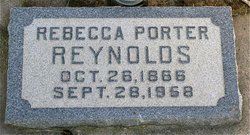

Rebecca Reynolds

Rebecca Porter
B: 26 Oct 1866
M: Henry Taylor Reynolds
D: 28 Sep 1958
Springville City Cemetery
Plot: Blk 42 Lot 2 Pos 8

 
Andrew Leslie Porter
B: 28 Jan 1871
M: Julia Ida Boyer
D: 2 May 1959
Springville Evergreen Cemetery
Sec B Lot 143 Pos 1


James Buchanan Porter
B: 9 May 1873
M: Emily Tate 
D: 15 Nov 1961
Salt Lake City Cemetery
R_15_5_1E_N2


April 14, 1894, the militia was organized in Mt. Pleasant. This company was known as Company C, First Infantry, and was mus­tered in by Colonel Tatlock, with Thomas Braby, Captain; Daniel C. Jensen, First Lieutenant; Magnus G. Rolph, Second Lieutenant, and was commissioned by Kaleb W. West, the last Territorial Governor. The company consisted of the following: Thomas Braby, Daniel C. Jensen, M. G. Rolph, J. M. Boyden, M. A. Boy­den, W. E. Watson, L. P. Nelson, J. W. Lowe, John Forsland. A. B. Williams, G. W. Thompson, B. C. Skillicorn, Willie Ander­son, Ferdinand Ericksen, Charles Hampshire, Axel Bjelke, E. W. Wall, Ole Olson, Clarence Winters, W. P. Winters, George W. Reynolds, John O. Lofgren, J. B. Porter, Andrew L. Porter, Byron G. Wheelock, George Christensen, Henry Ericksen, Erick H. Erick­sen, Olaf C. Andersen, John Knudsen, Amasa Aldrich, James Jor­gensen, James F. Jensen, Louis H. Brand, George Brand, George M. Miller, William B. Allen, Bent R. Hansen, L. 1. Harward, Olaf Rosenlof, John H. Hansen, Arthur McArthur. Mt. Pleasant History p 174


During the late summer and during the fall and winter months, P. M. Peel and James Porter Sr., built a chopping mill on Peel's lot on Pleasant Creek, (northeast corner, intersection, Main Street and First West) where the stream had previously been taken out and used for irrigation purposes. Here the stream furnished the water power with which to run the mill. Owing to the distance to the nearest flour mill, this mill was a great assistance, and the people were glad to take their wheat there to be chopped. It was ground between two stones and came out quite black, but coarse as it was, it served the purpose and was used for bread. At about this time, a small Burr mill was built east on Pleasant Creek, a little south of where the Mount Pleasant flour mill is now, by John

Fredrick Fechser and John Ellertsen, (Spring City). A whip saw was installed in the fort, on the banks of Pleasant Creek, by Wellington Seeley and Rudolph N. Bennett, and was operated by Tho­mas Dutton.  Mt. Pleasant History p 64


Because of the need of shoes, one of the most important and useful industries was that of leather tanning. A tannery was established by James Porter, on the east side of the street, First West between Main and First South, and here with others, John Willis was employed. Wallis, a professional tanner, also operated a tannery on his lot, Main Street and Third East. He did splendid work and was a great help to the community. Later, N. P. Nielsen, usually known as Pete Tanner, set up in a smaller way an establishment on his lot in the western part of the city. Still later, a stock company was organized, for which certificates were issued and stock in the company was sold. This company was located on Twin Creek and was later run for a number of years by Emanuel Christensen.     Mt. Pleasant History p 73 


The North Ward Association was re-organized November 2, 1886, as follows: Joseph Madsen, president; Mangus G. Rolph and William Sorensen, counselors. The South Ward Association was re-organized with George Christensen as president; Ferdinand Clark and Lauritz Clark, counselors; Ferdinand Ericksen, Secre­tary. Mangus G. Rolph became president of the Ward February 29, 1888. The respective associations in both wards continued to meet together for several years after the division with their two sets of presiding officers. No records have been preserved for the period commencing with April 3, 1889, and ending with October 20, 1895. On the latter date, Adolph Merz was sustained as pres­ident, with Robert W. Livingston as First, and John A. Matson, as Second Counselor. Christian N. Lund, Jr., Secretary. By this time Mt. Pleasant had again become only one ward; hence the last organization included all the young men in Mt. Pleasant. John H. Hansen was sustained as Second counselor to President Merz, October 18, 1896, and James B. Porter, secretary and treas­urer. The society was re-organized September 25 1897, as follows: Robert W. Livingston, President; Andrew Larsen, First, and Asa F. Reynolds, Second Counselor; James B. Porter, Secretary. John N. Ericksen and Asa F. Reynolds were sustained as counselors to President Livingston, November 27, 1899, with the following offi­cers, who still acted at the close of the century: John N. Ericksen, President; Christian Johansen, First, and Byron Carter, Second Counselor; Eugene McArthur, Secretary. Mt. Pleasant History p 257

Tuesday, October 1, 2024

IDA CAROLINE POULSEN LARSEN and Lauritz Larsen ~~~ Pioneers of the Month ~~~ October 2024


Lauritz Larsen Jr.


Excerpts  from the Mt. Pleasant Book  with Lauritz Larsen

 Page 99 …… July 15th, General W. S. Snow was put in command of the Sanpete Militia. Three companies were at once organized at Mount Pleasant, with the following officers: Fredrick Nielsen, Captain of Company A, he, however, resigned and Lauritz Lar­sen succeeded him; Company B, with Jacob Christensen, Captain, and Andrew Madsen, First Lieutenant. The Home guard, called the Silver Greys, consisted of older men with John Tidwell as 'Captain. While the organization of the Militia was being effected throughout the country, word had been received that Anthony Robinson, of Monroe, and Robert Gillispie, of Mount Pleasant, had been killed by the Indians near Salina. Fred J. Keisel, who later became mayor of Ogden, was Indian Agent in Sanpete County and he wisely withheld ammunitions from the Indians.
The settlers procured bars of lead, which were melted in special heavy vessels, and poured into bullet moulds, making bullets to fit certain guns used. These, with gun powder carried in a powder horn, was the usual ammunition. That ammunition was very valuable is shown in the following quotation from Gott­fredson's Indian Depredations in Utah in a statement made by Jos­siah Sylvester. "I was out of ammunition and was informed that Elijah B. Ward had been seen molding bullets for his pistol, which was the size I wanted. Someone went with me to get them. It was dark and we had no light.  As Ward's corpse was laid out on a trunk or chest, we had. to raise him up, while I searched for the bullets until I found them."

Page 129
Mt.. Pleasant Z. C. M.I.
In February 1869, the Mt. Pleasant Z. C. M. I. was organized. It was a co-operative organization patterned after the Z. C. M. I. that was organized the year previous in Salt Lake City, under the instructions of President Brigham Young, who at that time pointed out to the people the necessity and the benefits of such institutions. The Mt. Pleasant Z. C. M. I. began business in a small room, in a log building, afterwards known as Anderson's Blacksmith Shop, on the east side of State Street, about Third South. Here Anthon H. Lund served as clerk. After a time, the Company erected a log building on the southwest corner, intercession of State and Main Street. Quoting Amasa Aldrich: “This was quite a creditable building at that time, being built  of logs chinked with mud. The room on the inside was plastered with mud. Outside, above the door, which faced the east, was painainted the sign 'Z. C. M. I.' Underneath this was painted the
“All Seeing Eye,' and beneath that, 'Holiness to the Lord.' This was the first store building built in Mt. Pleasant, and became known as the Mormon or Polygamist Store. Charlie Hampshire, and Olaf Sorensen were clerks who served. Charlie spoke English and Ole spoke Danish, hence the people could always be served, because when one could not understand the customer, the other could. There were many customers and on Saturday one would have to put in the better part of the day trying to get waited on. Blenda Dehlin and Lauritz Larsen Sr. later assisted as clerks. The store carried a various line of merchandise and people could get most anything needed. The mischievous boys of those days would remove chinks from between the logs, reach their arms in and help themselves to the stick and rock candy." Produce was

Page 131
President Young and a number of the twelve apostles again visited the community. They were met by the brass band, the Sunday School children and a great many saints. At a large gathering held in the bowery, Joseph F. Smith, Wilford Woodruff, George A. Smith and George Q. Cannon spoke of the benefits of  co-operation and home manufacturing, and also dwelt on the Word of Wisdom. President Young pronounced a blessing upon the people, begging them to live their religion. Many good instructions were received and the saints rejoiced much over the visit. Lauritz Larsen was at this time serving as the church re­corder. The grasshoppers having nearly disappeared, the people "were successful in again raising a large crop of grain. The Union Pacific Railroad had reached Ogden and many implements were shipped into the territory. A combined reaper-mowing machine, called "The World," and a hay rake were purchased and brought to the town by C. W. Anderson and Andrew Madsen. This was the first rake and machine brought to Mt. Pleasant.

172

council concerning the placing of the poles, and for the use of the Public Square for peeling them. Council thought the example of larger cities worth considering, and it was decided that the poles should be placed in the center of the street.
    At about this time Larsen Brothers, Lauritz, George, and Peter A., built a dance pavilion on State and Third South.
In 1892 the city experienced a serious epidemic of diphtheria. resulting in many deaths and causing much sorrow among the people.


182

Miss Annie Johansen, formerly the telegraph operator, was the first telephone operator. This, however, was not the first telephone in Mt. Pleasant. Sometime, about 1874, there was no telegraph operator in Fairview, and a make shift telephone line, using the telegraph wire, had been installed be­tween Mt. Pleasant and Fairview, that the telegrams received in Mt. Pleasant for Fairview, might be sent on. Miss Annie Johansen. the telegraph operator in Mt. Pleasant, having charge of Mt. Pleas­ant and Peter Sundwall Sr.; and Hyrum De Frieze operating at Fairview. This, after a fair trial, on account of wire trouble, was abandoned.
In 1901, the Mt. Pleasant Commercial Bank erected their building on the north side of Main Street between Second and Third West.
The mountains east of the city had in the past produced a great deal of lumber, and about this time and later, a number of mills were operated, among these later lumber dealers from time to time were: E. L. Durphy, Lauritz and Peter A. Larsen, John H. Seeley and James Monsen. Large forest fires were often seen in the mountains.
The Union Mercantile Company was organized in 1903, by Andrew Madsen and sons, Andrew C., Anthon and Neil M., and C. W. Anderson, George Christensen and Olaf E. Olson. For a number of years, they occupied the brick building known as the Co-op Store building, and the building now acquired the title of the Union Building. .
     January 22, 1903, Thomas Braby was officially appointed Postmaster of Mt. Pleasant.
October 10th, Lars P. Madsen, Bishop of the North Ward, while coming down Cotton Wood Canyon with a load of coal was thrown from the wagon and killed.
In March 1903, while George Christensen was mayor, the city voted a bond for water works, but not until 1905, during H. C. Beaumann's term, were contracts let for installing the system. In due time, the system was installed, and with its completion. the settling barrels with their prickly pears, which had been used at most every home for the settling of the roily water, disappeared.


198

January 21, 1915, L. P. Nelson was appointed Postmaster, and after a short time the office was moved to the Armory (Hansen) Hall building.
Mt. Pleasant in 1913 again became noted in the baseball field, and professional players were imported. City records show that in 1914, a two day baseball tournament was held.
It is interesting to know that the game was introduced in Mt. Pleasant by Ras Freston, in 1875. At that time, the team was: Ras Freston, pitcher and c. f.; John Gustave Johnson, pitch­er; John Stansfield, catcher; Bennett Munk, s. s.; Pet Burrison,
1st base;………,  2nd base; and Herb Day, 3rd base. Tom
Coates and Bill Averett, field; John L. Larsen and Eph Day, subs.
They, at that time played on the north public square. During the middle eighties, they were known as "Cracker Jack" teams. Among the players then were: M. G. Rolph, George Christensen, Bert Wheelock, Ed Freston, Ras Freston, Erick Gunderson, Lauritz Larsen, George Day, Charl Averett, John H. Hansen, Hans Jensen. Joe Clark, George Sears, Hyrum Farnsworth, and others. For several years, the personnel of the teams were made up of these people. The Red Stockings and the Resolutes became famous for their playing. Games were played on the public square, and on the ground later purchased by the city for a city park.


237

1904-5. Mayor, H. C. Beaumann; Recorder, A. H. Maiben; Treas­urer, E. Ellis Day; Marshal, Andrew S. Jensen; Justice of the Peace, A. B. Waldermar; Councilors, A. E. Mcintosh, (16) Joseph Monsen, A. C. Madsen, George H. Marshall, (17) A. C. Wall, S. E. Jensen, Bent R. Hansen.
1906-7. Mayor, James Monsen; Recorder, A. H. Maiben; Treas­urer, Sarah E. McClenahan; Marshal, Richard Hendricksen; Justice of the Peace, A. B. Waldermar; Councilors, Christian Johansen, A. Merz, A. O. Madsen, George Brand, Joseph Monsen.
1908-9. Mayor, James Monsen; RecorderLauritz Larsen; Treas­urer, Mrs. Rhea Wambolt; Marshal, Hans Poulsen; Justice of the Peace, A. B. Waldermar; Councilors, Thos. West, N. P. Madsen, E. W. Wall, Christian Madsen, Christian Johansen.
1910-11. Mayor, Ferdinand Ericksen; Recorder, Daniel Rasmus­sen; Treasurer, Authinal Carter, (18) William Hansen; Justice of the Peace, Justus B. Seely, (19) John Carter; Councilors, Lauritz Larsen, Christian Madsen, Jas. W. Anderson, Jas. D. Simpson, Thos. West.
1912-13. Mayor, James W. Anderson; Recorder, Daniel Rasmus­sen; Treasurer, Mrs. Elizabeth Larsen; Councilors, H. Leroy Neilson, A. E. Mcintosh, Justus B. Seely, (20) George C. Sorensen, A. Merz, Lauritz Larsen.
1914-15. Mayor, Abram Johnson; Recorder, Daniel Rasmussen; Treasurer, Elizabeth D. Larsen; Councilors, Nils Larson, four years; E. C. Johnson, J. C. Jordan, H. Leroy Neilson, Joseph Monsen. (Abram Johnson resigned during his term and Jos­eph Monsen was made mayor and Andrew Larsen became a councilman. )

P 278
The pioneer homes were noted for their hospitality. There were then, as now, certain groups who especially enjoyed associating together. Because of the variety of nationalities represented, even in so small a community, they were better able to understand and enjoy the association of those who came from their mother countries.
One group consisted of the following men and their wives: Peter Monsen, Hans Poulsen, Niels Johansen 1st, Mortin Ras­mussen, Hans Brown, and Christian Jensen 1st. This aristocratic gentleman could entertain them with stories of how he had worked for the King of Denmark.
This group met at their different homes and enjoyed dancing to the music of the fiddlers John Waldermar, Jim Hansen and Lars Nielson.
Another group which met often and enjoyed their suppers and dancing were: Mr. and Mrs. Frans Christensen, Jens Hen­dricksen. Lauritz Larsen, Jacob Christensen, and Taylor Johnson, who was a very pleasant and jolly man, making great fun for everyone.


327

In 1866, Paul Dehlin had sort of a sawmill machinery oper­ated by a big water wheel, placed in the stream on Main Street between Third and Fourth west about where the Clyde property is now located.
In 1864 William Jennings established the Jenning's store, on the lot where William Hansen now lives, north side of Main Street between Second and Third west. It was managed by Joseph Stanford. Anthon H. Lund and Charlie Hampshire clerked there for a short time.
About 1869 a Co-op store was started, later this company erected a building on the southwest corner of the intersection of Main and State streets.
A few years later on account of the increasing business of this company they built a brick building on the northeast corner of intersection Main and State streets.
The brick for this building was made west of town under the direction of Andrew Madsen and C. W. Anderson; Martin Rasmussen, James C. Meiling and others did the burning. Among those who did the excavating were John Meyrick, Paul Coates, Sr.; Lars and Andrew Christensen were masons, and Jacob Rolfson and Eric Gunderson, Sr., were carpenters. Nothing but first class bricks or materials were put into the building at that time.
The same clerks, Charlie Hampshire, Ole Sorenson, Blenda Dehlin, and Lauritz Larsen, served in this building; among those who later served were Wellington Seely, Wm. Morrison, Jr., Stena Jensen, Louise B. Madsen, Caroline Johansen, Nora Jorg­ensen, Lena Madsen, and Minie Johansen.
In 1898 the Equitable Building was erected and the stock transferred there. This company built the Branch Building on Third South and Second West, which for some time they operated in connection. Later Tathen and Dun. Then George Christensen, then the Progress Branch, and then Paul Monsen and Vern Gunderson were located there.
In 1893 the Union Mercantile Company was organized. They did business in the brick building formerly occupied by the Co-op store. In 1897 the company was reorganized as Madsen & Sons Mere. Co., who were in business for a number of years. Madsen & Longsdorf began business in the building in 1898


Lauritz Larsen, Jr. (the tall guy in the rear)


/> 

Sunday, September 1, 2024

Joseph Henry Trauntvein and Kristine Sorensen Trauntvein ~~~ Pioneers of the Month ~~~ September 2024


Herman Justus Trauntvein and Anna Catherine Trauntvein
Parents of Joseph Henry


Henry Trauntvein 
Kristine Sorensen Trauntvein
Father and Mother
and Sorensen family


Trauntvein Family Tree